The Future of the BBC – What You Need to Know
Why This Matters
The BBC is one of the UK’s most important public services.
It informs, educates, and entertains millions.
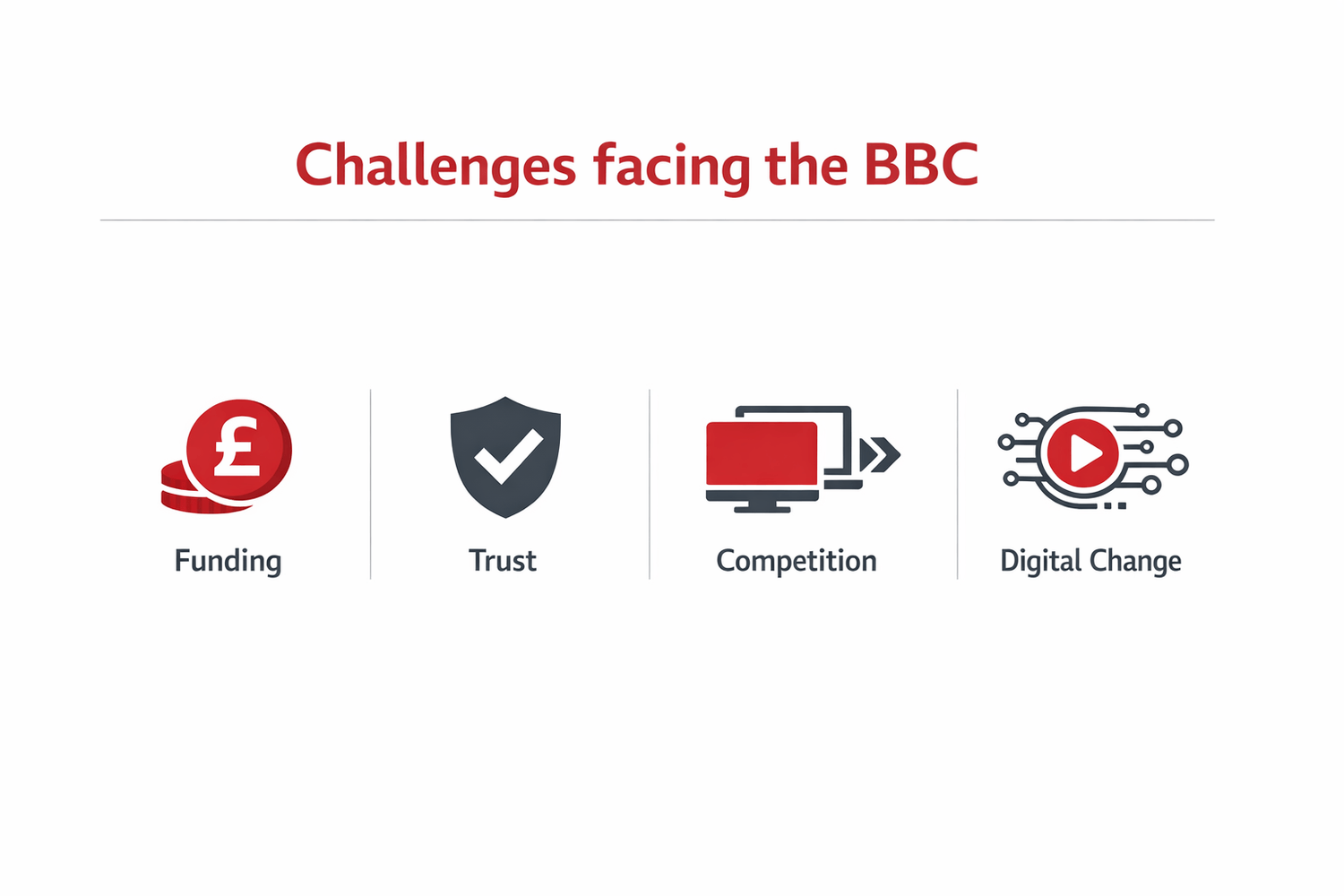
But today, it faces serious challenges:
Funding is under pressure
Fewer people are watching traditional TV
Trust has been affected by past mistakes
Global streaming services are strong competition
Big question: How can the BBC survive and stay relevant?
How the BBC Is Funded
Most BBC money comes from the TV licence fee.
Licence fee (2024/25): £169.50 per year
Total income: £5.9 billion
Licence fee provides about two-thirds of funding
But problems are growing:
12.5% of people avoid paying
3.6 million households say they don’t need a licence
Around £1 billion lost each year
👉 Traditional enforcement is becoming less effective.
Changing Viewing Habits
Audiences are shifting, especially younger people.
Fewer 16–34-year-olds are watching the BBC
Streaming platforms like Netflix and YouTube dominate
Viewers now expect on-demand, personalised content

Possible New Funding Options
1. Household Levy (like Germany)
Every household pays a set fee
Simpler and harder to avoid
2. Tax-Based System (Nordic model)
Paid through income tax
Fairer, based on earnings
3. Subscription Model
Pay only if you want BBC content
Risk: some people (especially older or low-income) could miss out
4. Hybrid Model
Mix of public funding + more commercial income
👉 Most experts favour a household levy for stability.
Quality and Trust
Well-funded public broadcasters:
Produce better content
Offer trusted news
Provide services others don’t (local news, education, children’s programmes)
The BBC still has relatively strong trust - but must protect it.

Past Mistakes – Why Change Is Needed
Several major failures damaged trust:
Martin Bashir interview scandal
Iraq reporting issues
Jimmy Savile investigation failure
Problems included:
Poor oversight
Lack of internal challenge
Departments not communicating
👉 Lesson: Stronger leadership and accountability are needed.
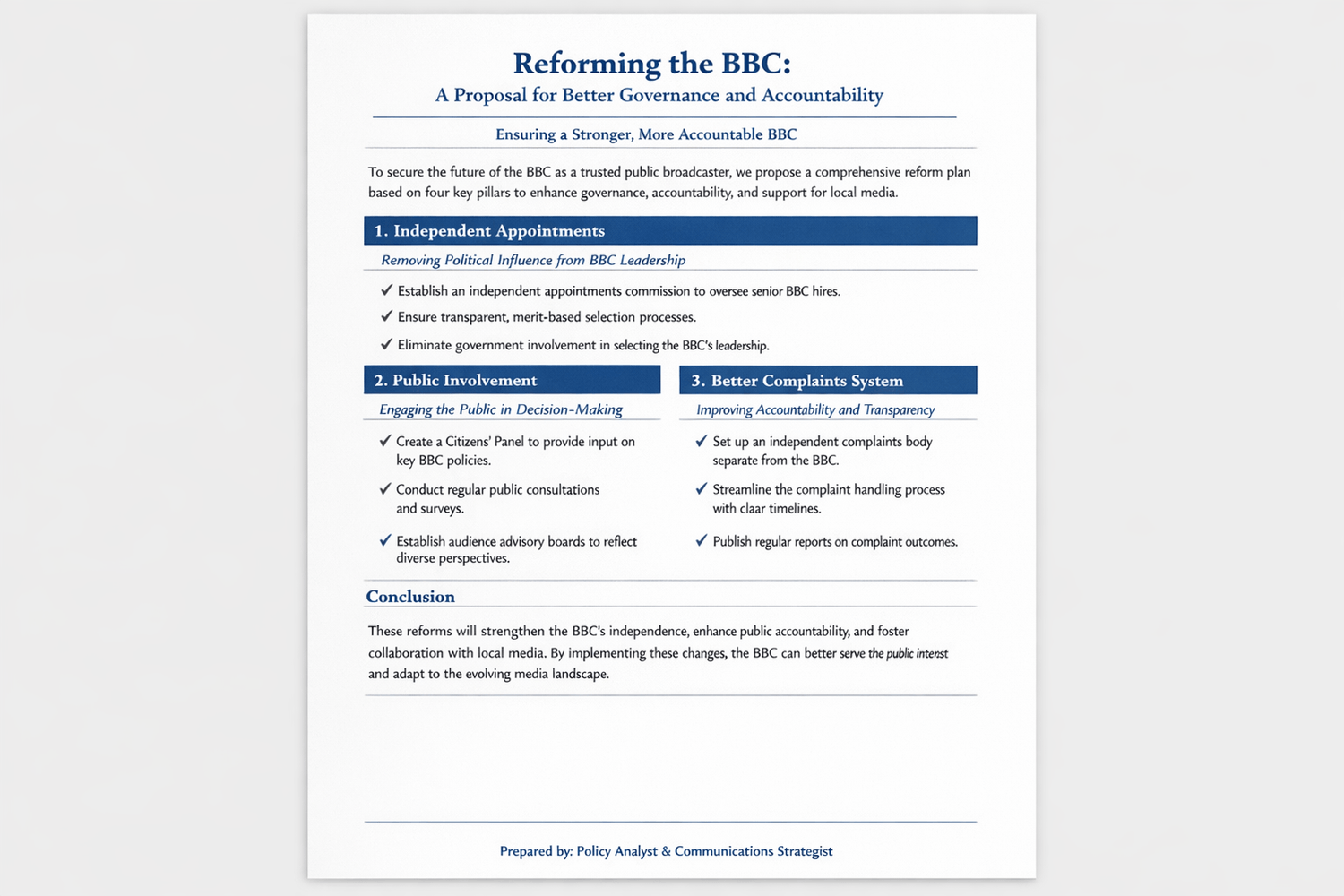
Proposed Changes to Improve the BBC
✔ Independent Appointments
Remove government control over senior BBC roles
✔ Public Involvement
Give the public a stronger voice in decisions
✔ Better Complaints System
Clear, transparent handling of mistakes
✔ Support Local Media
Work with local news providers, not compete with them
Going Digital – But Not Leaving People Behind
The BBC is moving online:
More content on iPlayer
Digital-first strategy
But risks include:
Older audiences being left behind
Reduced access for those without internet
👉 Key priority: keep services accessible to everyone
Key Recommendations for the Future
Replace licence fee with a household levy
Make the BBC independent from political control
Ensure strong public oversight
Keep services available to all age groups
Focus on trusted, high-quality content
Final Thought
The BBC remains a vital national institution.
But without change:
Funding will weaken
Audiences will decline
Trust could fall further
With the right reforms, it can continue to:
Inform
Educate
Entertain
For generations to come.
The Future of the BBC – A Quick Overview
The BBC is facing a critical moment in its history. Rising licence fee evasion, changing viewing habits, and strong competition from streaming services like Netflix are putting pressure on its traditional funding model.
Fewer people—especially younger audiences—are watching live TV, and millions of households now choose not to pay the licence fee. This has led to significant funding gaps, raising questions about how the BBC can continue to deliver its trusted news and programmes.
Several alternatives are being considered, including a household levy or a tax-based system, both designed to provide more stable funding. At the same time, there are calls for stronger independence from government, better accountability, and a greater voice for the public in how the BBC is run.
The challenge ahead is clear: adapt to the digital age without leaving audiences behind. With the right reforms, the BBC can remain a trusted and essential service for future generations.
Read More ...
🇬🇧 BBC funding explained (UK Parliament briefing)
A clear, factual overview of how the BBC is funded and what could change in the future.🏛️ BBC Charter Review and public consultation
Official government consultation explaining funding options and future plans.📊 BBC licence fee debate and possible replacements
A simple breakdown of why the licence fee is under pressure and what could replace it.📰 Why the BBC may need a new funding model
Insight into the wider debate about the BBC’s role and long-term future.
YOU MIGHT LIKE

Updated Regularly
News From a Wider Area
POPULAR POSTS

Popular Events Will Appear Here
Popular BCP News Will Appear Here
Popular National News & Beyond
NEWSLETTER
It's FREE To Join Our Email Updates - Keep up to date with latest events, local news & articles!
Created with Systeme.io